Lisa wehler || silver moon antiques

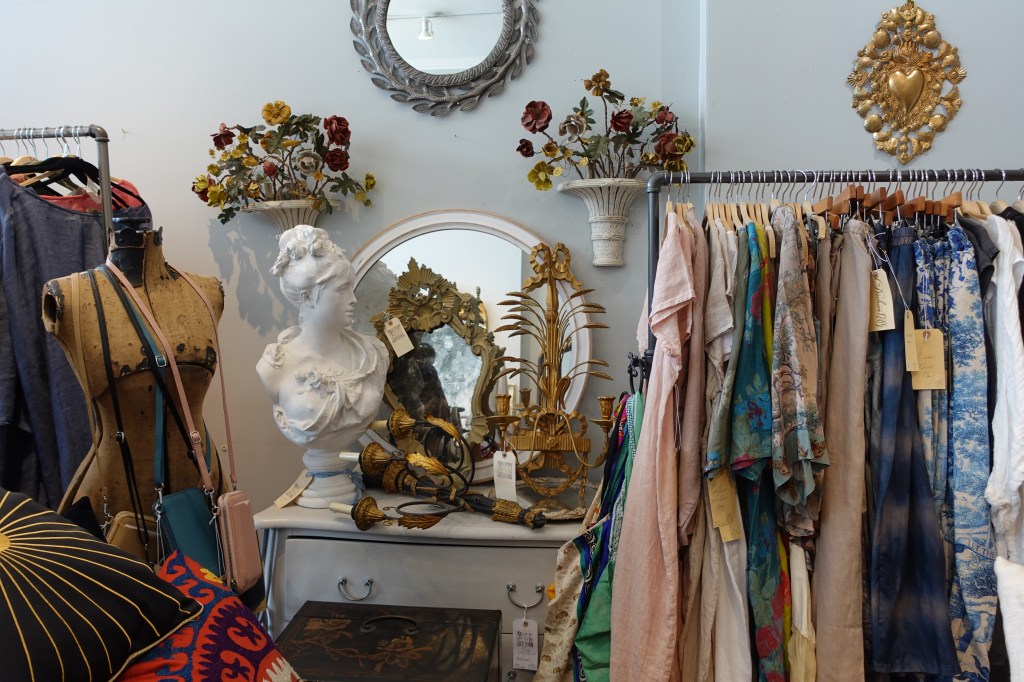
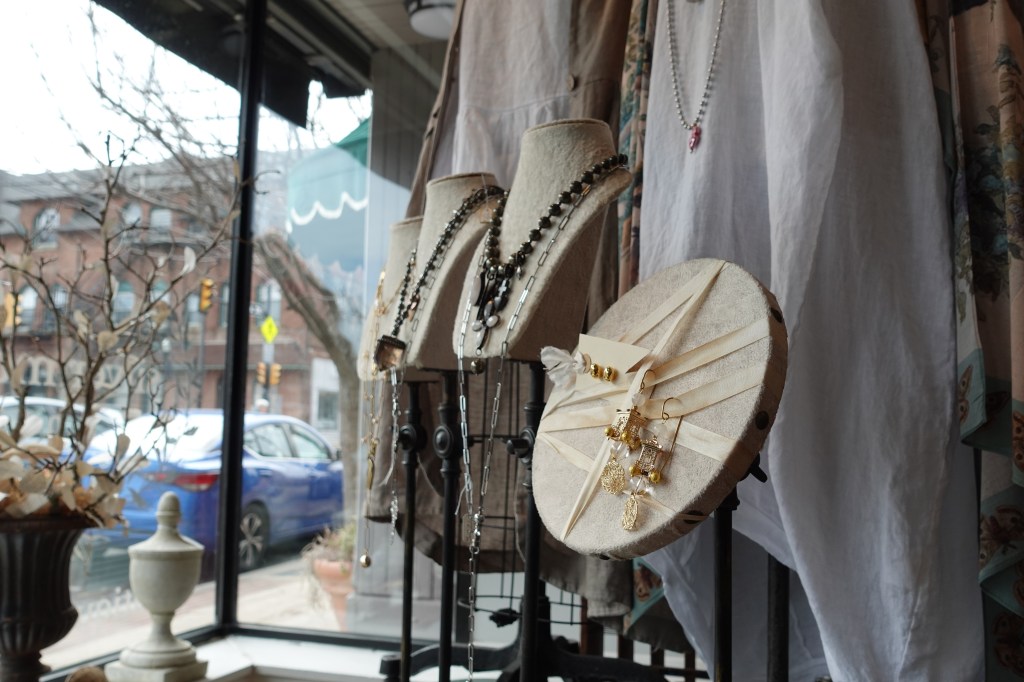
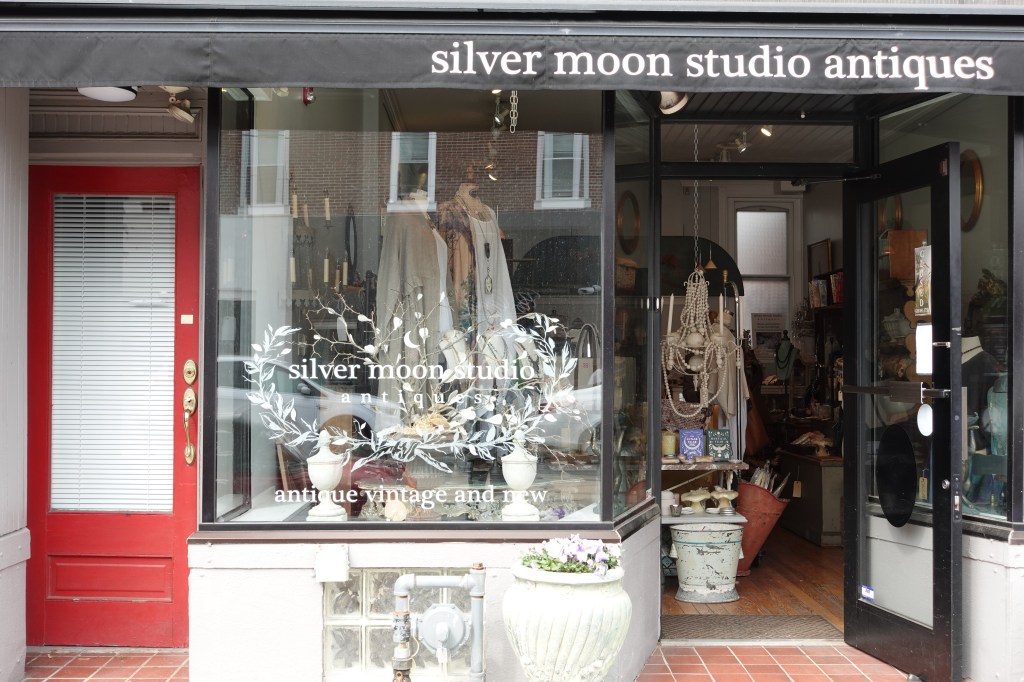
Silver Moon Antiques, residing on Media’s State Street, is the kind of place that catches your eye as you walk by. Returning customers are drawn inside by the aesthetic – a sense that you are encountering different places in time. Velvet furnishings, hand printed patterns, hand-made jewelry where modern and antique elements meet – capturing a specific customer, someone a strong sense of imagination. Wehler’s background includes a childhood spent moving approximately twenty-five times, a fine art degree, a textile design business in New York City, and more experiences that led her to the world of antiques and artisan made products. Wehler’s father developed satellite communication networks for AT&T, requiring the family to move to different countries. “I lived in France, Iran, Germany,” says Wehler. “Iran was the Paris of the Middle of East.” As an adolescent, she wanted to be anthropologist, but felt disinterested in the lack of enchantment in the field. “The only thing I felt unlimited with is art,” she says. Wehler studied textile design at Moore College of Art in Philadelphia, started her own company, and eventually began refurbishing and re-selling antiques – this would become Silver Moon Antiques.

Mystery, creativity, and personal growth are constant sources of inspiration and inform Wehler’s daily life. For her, fairytales discuss humankind “falling in consciousness” and neglecting a spiritual aspect of life, something Wehler feels very connected to. The practice of encountering artwork and reflecting on how it impacts us is an opportunity “to learn about what the soul is trying to tell us.”

“When everything else disappears and you are just focused on what you are creating, I think that’s really when you are connected to your soul,” says Wehler. Over the years, her creative practice has evolved from textiles and furniture to jewelry. She has also spent many years engaged in personal and spiritual growth. It has been a journey to finding freedom and living a life that feels meaningful to her. “We have to let go of the shame of what you are or aren’t,” she says. She has learned how to recognize and break unconscious, repeating patterns in her life, and to accept her unique qualities. She views life as a work-in-progress and believes that what society often labels a ‘mistake’ are just a part of the story. “Everything in life, good or bad, was set up for me,” she says. “We can grow from experiences instead of being crushed by them.”
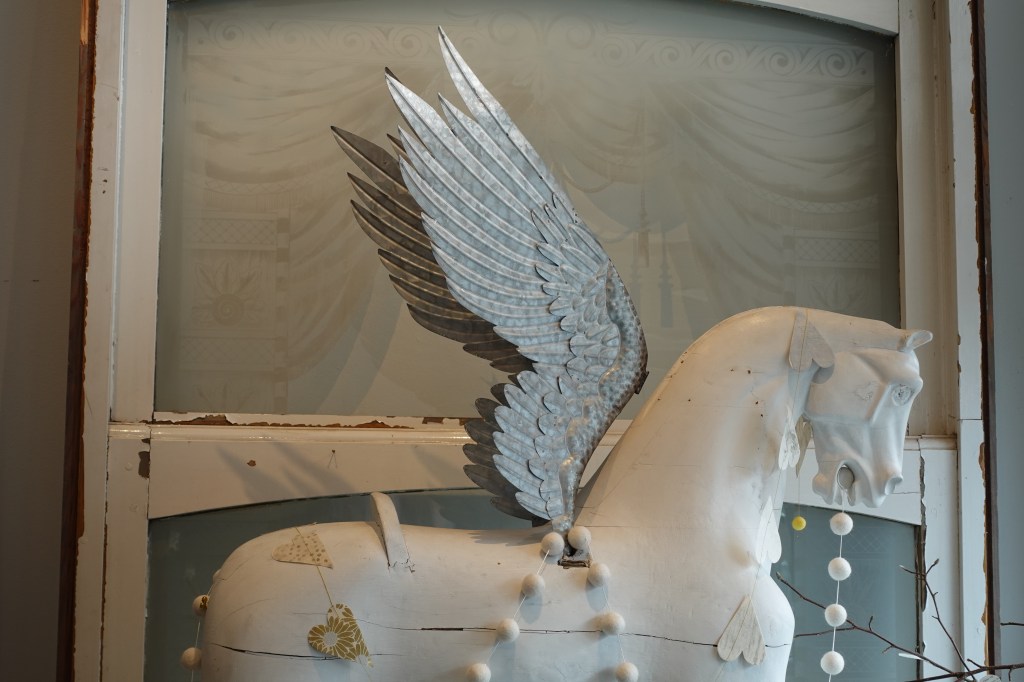
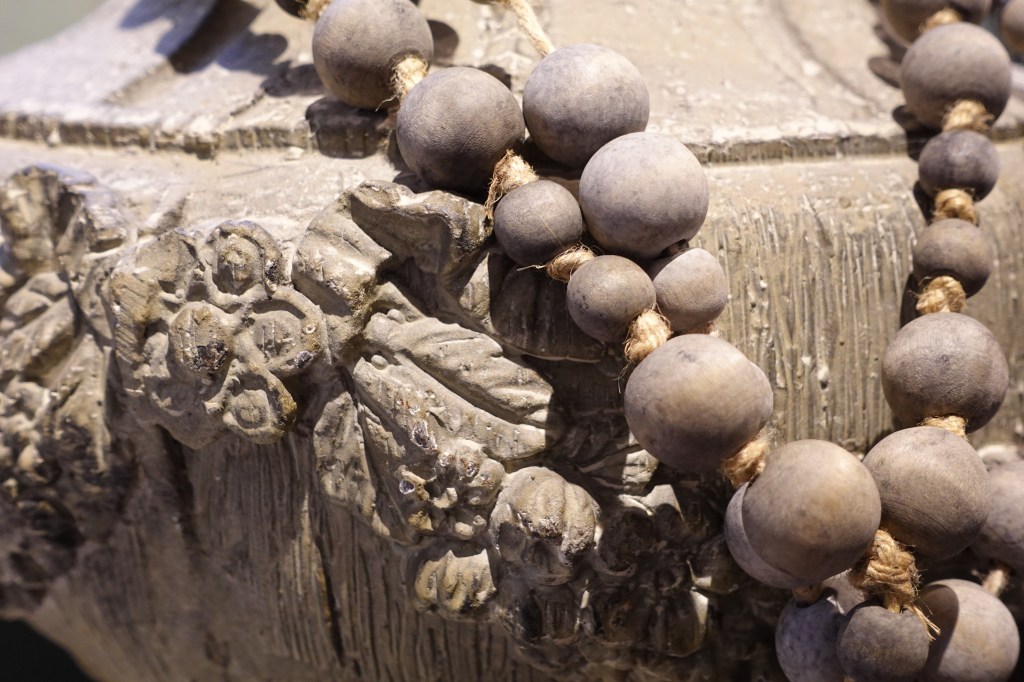
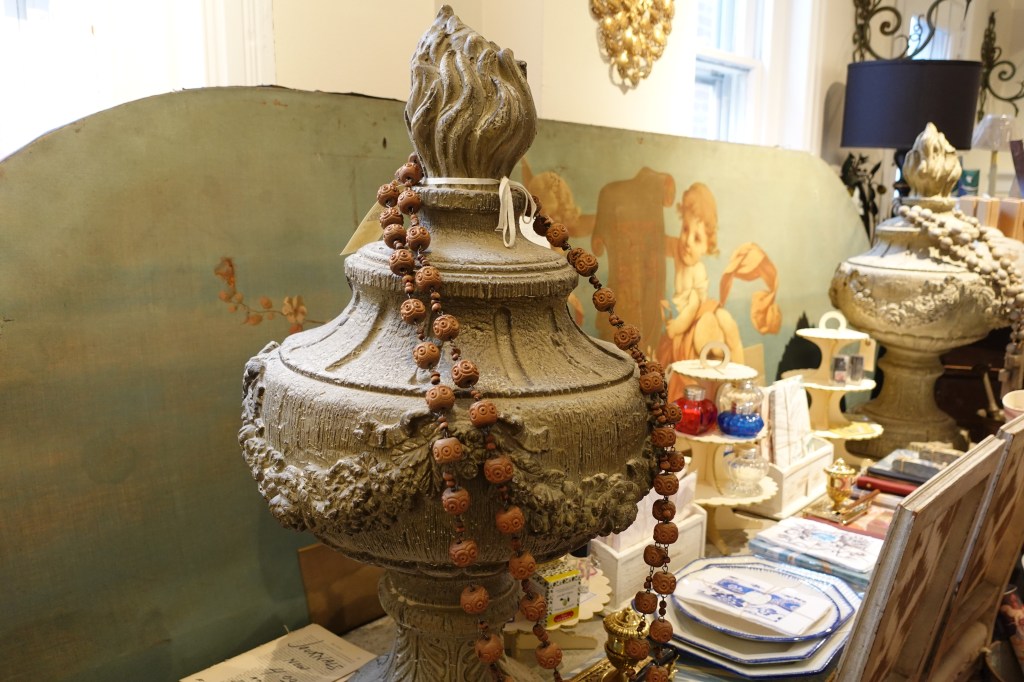
Wehler’s essence comes through as you browse Silver Moon Antiques. Stones and antique pieces hold stories, and unique apparel and housewares invite customers to express their own vision. The stationary section (with fountain pens, textured paper, colored and scented inks) holds the building blocks of a self-exploration practice. These materials provide an experience to slow down, witness, and identify deeper aspects of self. Wehler’s intentionality is what makes Silver Moon iconic. For her one-of-a-kind jewelry, she says, “I put a little of my concentration and my energy into it. It’s going to be unique.”
Visit Silver Moon Antiques:

5 East State Street

Media, PA 19063

Open Wednesday-Saturday 11am-6pm, Sundays 12pm-4pm

Facebook: SilverMoonStudioAntiques

Instagram: @silver_moon_studio_antiques

Melissa Sieling – Stained Glass Artist

image

A man lays sleeping over his scroll.  Behind his ear, a writing implement is carefully tucked.  A wheel of shapes in golden and cool colors form his halo.  Evidence of careful brush strokes lull the rich tones and soften the scene where the angel Gabriel enters Joseph’s dream.

The creation of all images relies on the balance of light and shadows, but stained glass must be seen through to exist with intention.  Illumination allows the true movement and life of each scene to unfold.  This image, inspired by a passage in the book of Matthew (1:20-25), is Melissa Sieling’s current work in progress at Beyer Studio in Pennsylvania’s Germantown.

image-3 copy 4

“Joseph’s Dream” in progress

When Sieling interned at Beyer Studio for one summer, she found that the art form exercised each area of her fine art studies.  “It’s a craft that’s so different from everything else that you kind of have to learn it from the bottom up.”  Programs at New York’s Rochester Institute of Technology, including sculpture, painting, and figure drawing, prepared her to embrace the tradition.  “It’s produced the same way that is was in the middle ages, except we have electricity and OSHA,” she laughs, “those are pretty much the only differences.”  At Beyer Studio, fire, cadmium, lead, and the melted sands that become resilient and dangerously fragile glass are used to tell stories.

After graduation, Sieling pursued employment in the field.  She further studied the different aspects of stained glass window production on the job, before finding a niche in painting and illustration.  Beyer studio designs primarily for Catholic and Protestant churches, but their clientele also includes community centers, independent living facilities, and universities.  Start-to-finish design, restoration, and a process that they call adaptive reuse, are the design services that they offer.

image-3 copy 2

You may have seen Beyer Studio’s work in any number of establishments in Pennsylvania, but stained glass has traditionally been a business of import and export.  Many new churches and parishes are opening in the South and South Western US at a near comparable rate to the ones closing in the North East.  Beyer Studio communicates electronically with their clients to meet the color and décor preferences of a Pastor or Priest.  Historically, many of the antique windows in the North East are from Bavaria.  Originally, Bavarian windows were sought after in many nations.  “There wasn’t a strong tradition here until the arts and crafts movement,” says Sieling of the cultural embrace of decorative and fine arts from 1880-1910.  The romance of the Bavarian style is what drew its nearly global acclaim with it’s “high degree of realism.”  She describes the classical depictions as having “idealized” the figures and, “a lot of darker and muted colors.”  Trends in stained glass, as with any decorate art, change in style.  Over the past ten years, Sieling has seen a more abstract sensibility, color relationships and loose form, phase out as newer churches desire the classic styles.

Antique dealers often seek restoration services.  Sieling remembers one window that was “made in Basel, Switzerland in 1609.”   While re-painting the worn areas was “a little nerve-wracking,” Sieling expresses a balance of seriousness and comfort with this style of painting that allows no margin for error.  Any mistakes are expensive.  Her work requires the careful confidence of relaxing into the creative mode.

image-3

“Joseph’s Dream” in progress

Painting a stained glass window is a reductive process, meaning that form is created by first bringing forth highlights, instead of building the form with shadows.  Illustration are hand drawn, enlarged, then the outlines are painted onto the glass.  For each shape the darkest shade of paint is applied evenly.  Then, Sieling strategically brushes away the paint to leave the highlights, working around where she knows each shadow will be.  While the painting is traditionally done against a light table, Sieling prefers to connect the pieces with beeswax, then stand up the piece up to allow light to shine through.  Painting this way, she can accurately see the image as future congregations will – illuminated by the sun.

image-3 copy 3

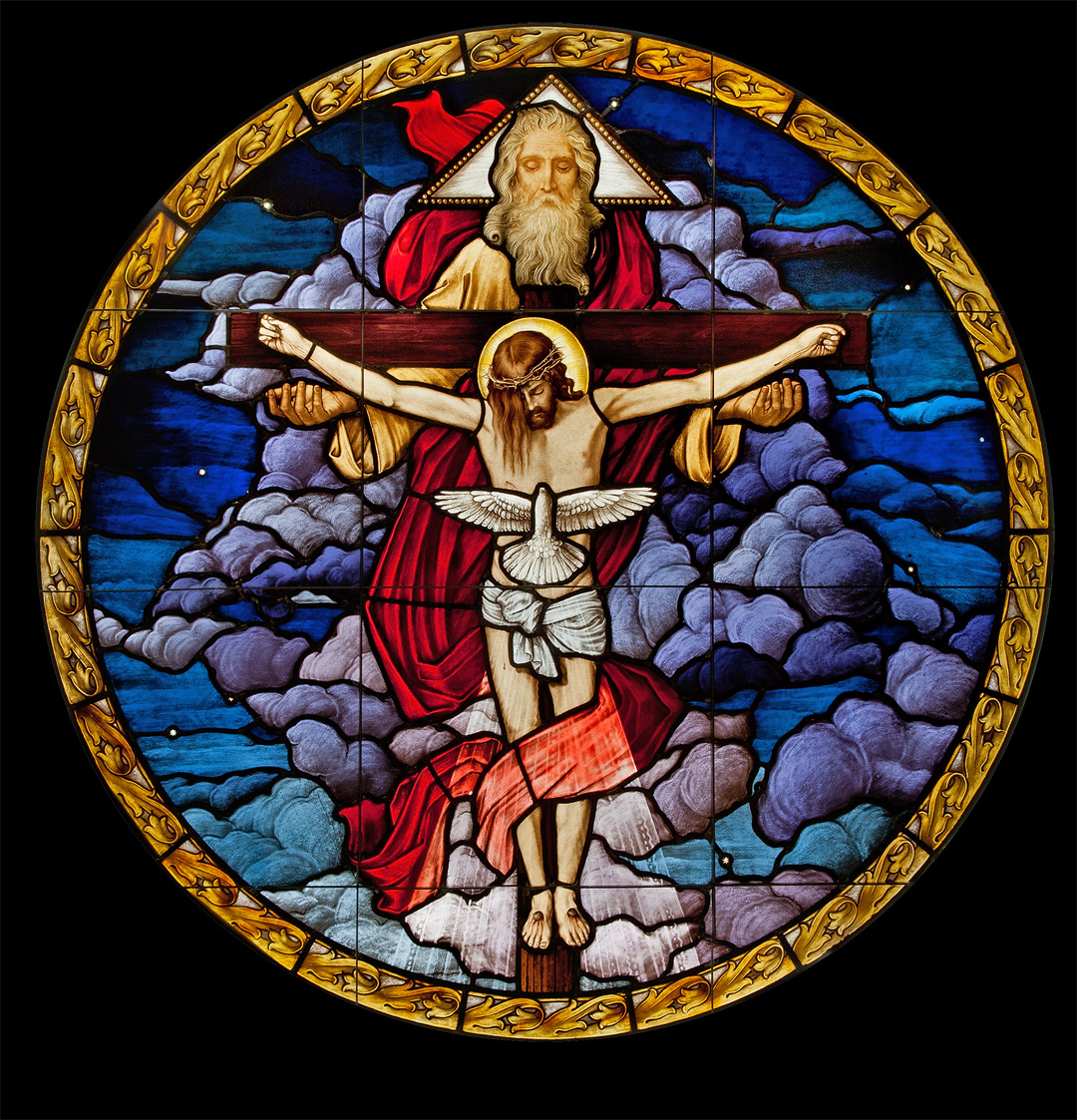
The process of adaptive reuse at Beyer studio involves altering the design of a previously existing window to fit a new parish’s taste or style.  The Arch Diocese of Philadelphia contacts Beyer studio when a parish is closing to request that they remove the windows.  Beyer studio then photographs each one to catalogue on their website.  Windows that fit the category of adaptive reuse are repaired and sold to newer churches.  This design process involves fitting the windows by cutting them down, or expanding the design by adding new shapes.

NeilCippon

image courtesy of Neil Cippon

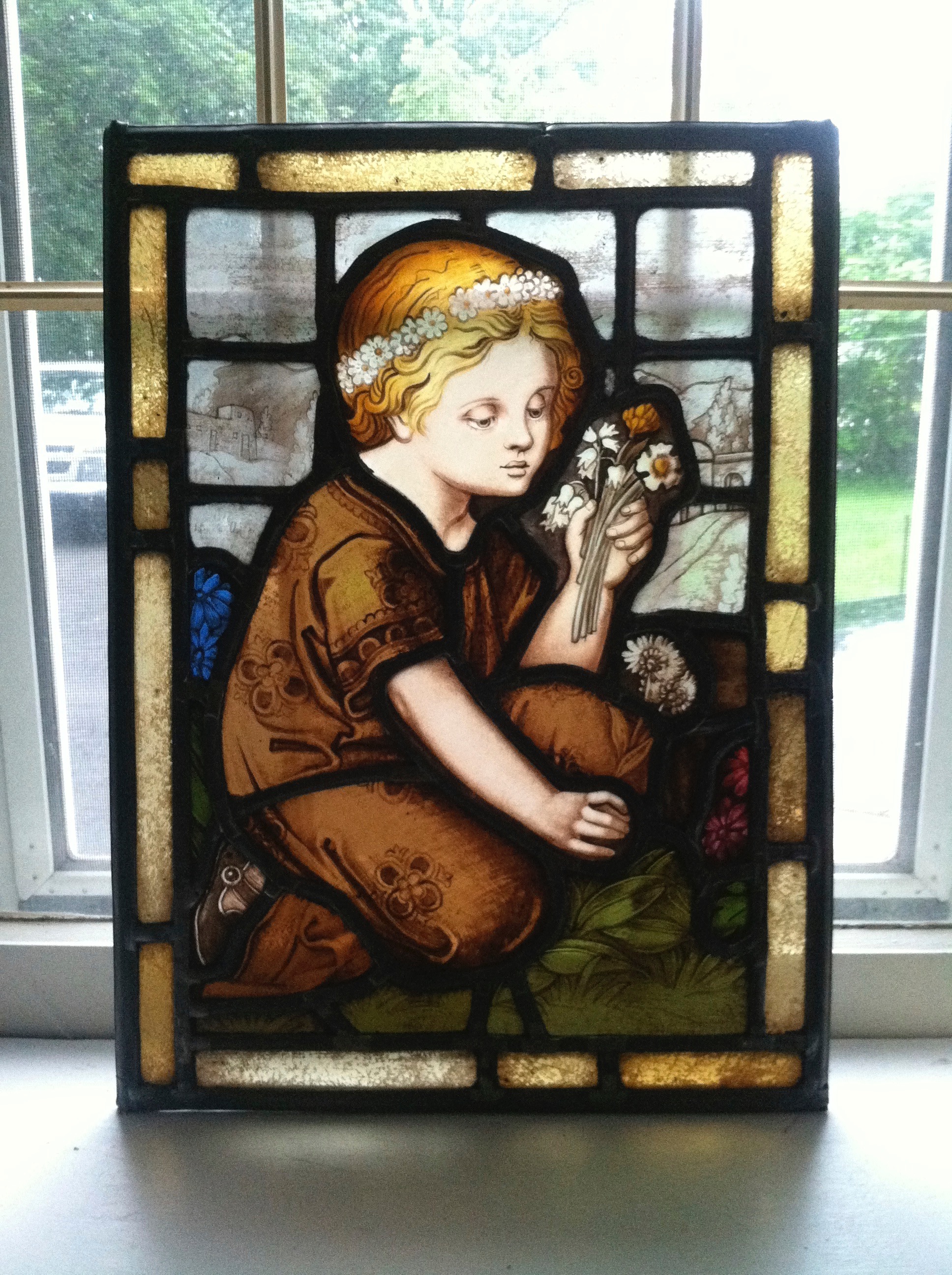
Some windows don’t age gracefully and are worn beyond the highest standard of renewal.  In this case, Beyer studio will cut them down to create new, smaller designs and sell them to the public.  “We’ll get a lot of people coming in who grew up in [a particular church] in Philadelphia,” says Sieling.  “People have a really strong connection with it.  It’s something they’ve seen every Sunday, or if they were in Catholic school, every day.”

When asked why the windows hold such significance and strike such emotional and spiritual chords, Sieling says, “In a way, I think some people kind of view it as a meditation.”  She imagines people walking around a sanctuary or parish and taking in each scene in the windows.  Sieling experiences this herself in her daily work.  “You can’t help but think about it as you’re working on it…all the characters, what are they feeling, what would it be like to be in that situation.”

NeilCippon2

image courtesy of Neil Cippon

Seen in the wall of a parish, the illumination of the colored glass reaches toward the congregation as the literal transparence invites the viewer to enter into the scene.  It is an invitation to meditate on the figure’s experience or your own.  “People can feel a connection with God in different ways.  For some people it’s visual, for some it’s music, for some people it’s nature.  It’s a different form of meditating on God.”  The tradition of contemplation in the Catholic religion has lasted for many, many years.  In work, church, and life Sieling has had this experience herself, and she says “I think some people view the windows that way.”

http://www.beyerstudio.com

(Originally published on Collector – May 2016)